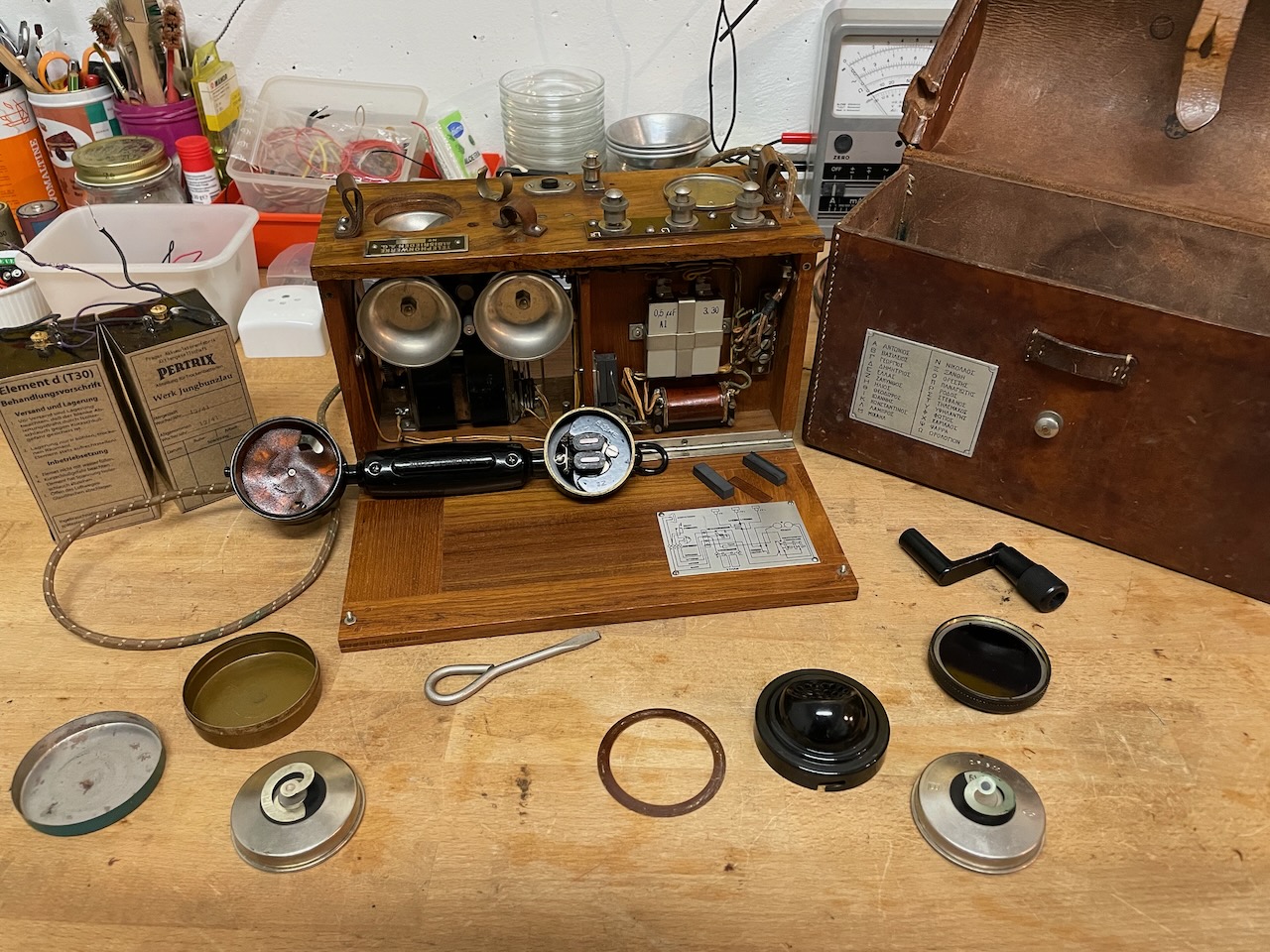
The Greek military field telephone "Type A" was manufactured in 1930 by Telephonwerke Albisrieden, a Swiss subsidiary of Siemens, in Switzerland. The model remained in service until 1941 [1]. At the time of its introduction, Greece was governed by the Second Hellenic Republic (1924–1935), a period marked by political instability, frequent changes of government and efforts to modernise the country's armed forces. In 1935, the monarchy was restored, and in 1936 General Ioannis Metaxas established an authoritarian regime. During the late 1930s, Greece strengthened its military defences in response to growing tensions in Europe and the Balkans. In October 1940, Italy invaded Greece from occupied Albania, triggering the Greco-Italian War. Greek forces successfully repelled the invasion and advanced into Albania, but in April 1941 Germany intervened, invading Greece through Bulgaria and Yugoslavia. Despite Greek and Allied resistance, the country was occupied by Axis forces by the end of April 1941, apart from Crete, which fell in June.
The telephone is built on a wooden chassis housed in a leather carrying case. Its electrical design is relatively simple, featuring a hand-cranked magneto generator (short-circuited when not in use), a polarised bell ringer and a conventional induction coil with primary and secondary windings. A carbon-based lightning surge protector is also fitted. Two 1.5 V dry cells, similar in size to the German Element D (T30) or Swiss Leclanché cells, supply power to the speech circuit.
The chassis features a fold-down front panel providing access to the batteries and a spare microphone capsule. A second fold-down panel at the rear gives access to the lightning protector, induction coil, capacitor and handset terminals. The handset is made of black-painted metal and uses a microphone capsule of the common Lorenz capsule size.
The battery binding posts are located on the outside of the telephone and can be used to connect either the internal batteries or an external power source. This arrangement allows the batteries to be easily disconnected without removing the telephone from its carrying case.
Disassembled.
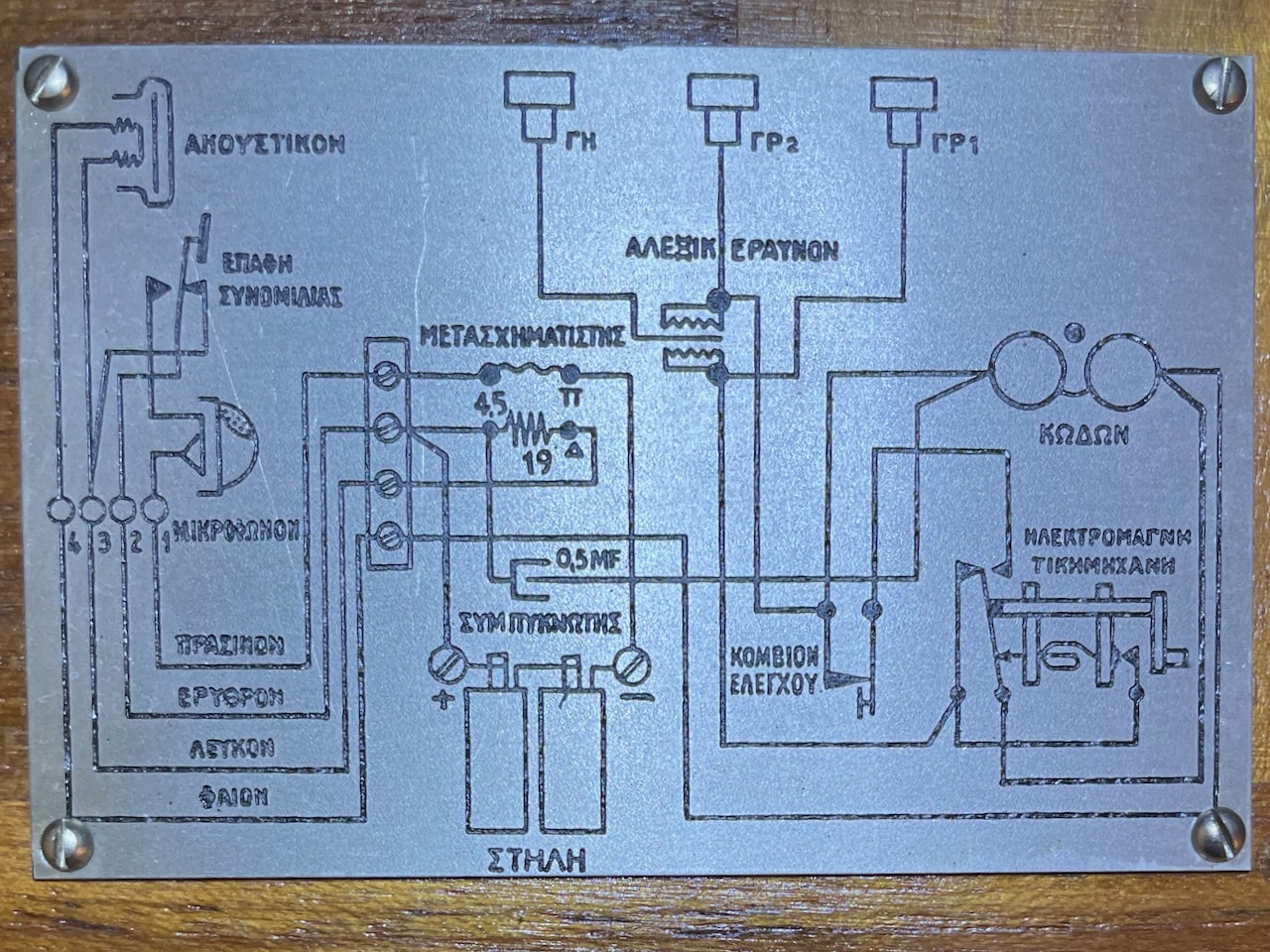
Wiring diagram, annotations in greek.
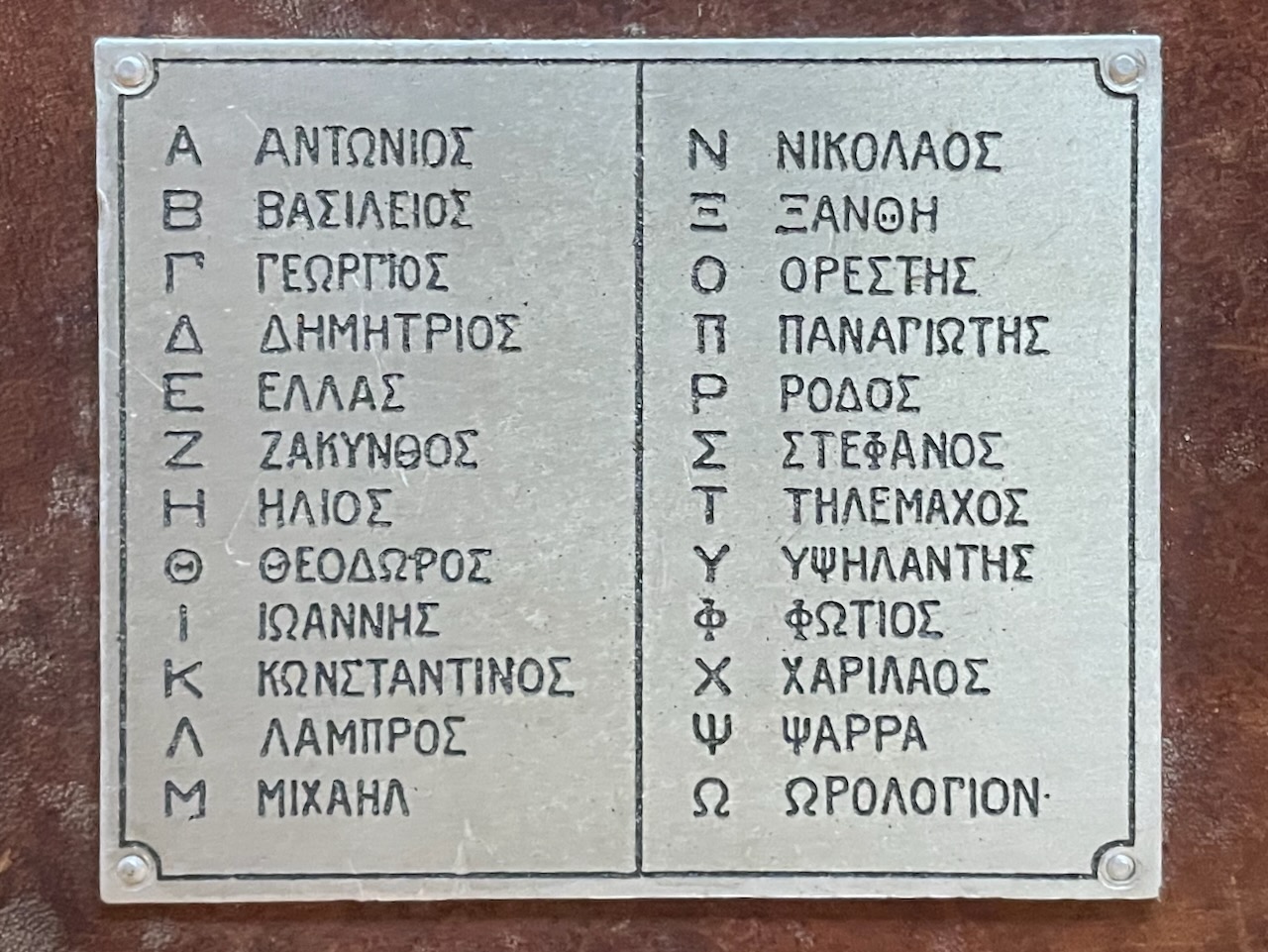
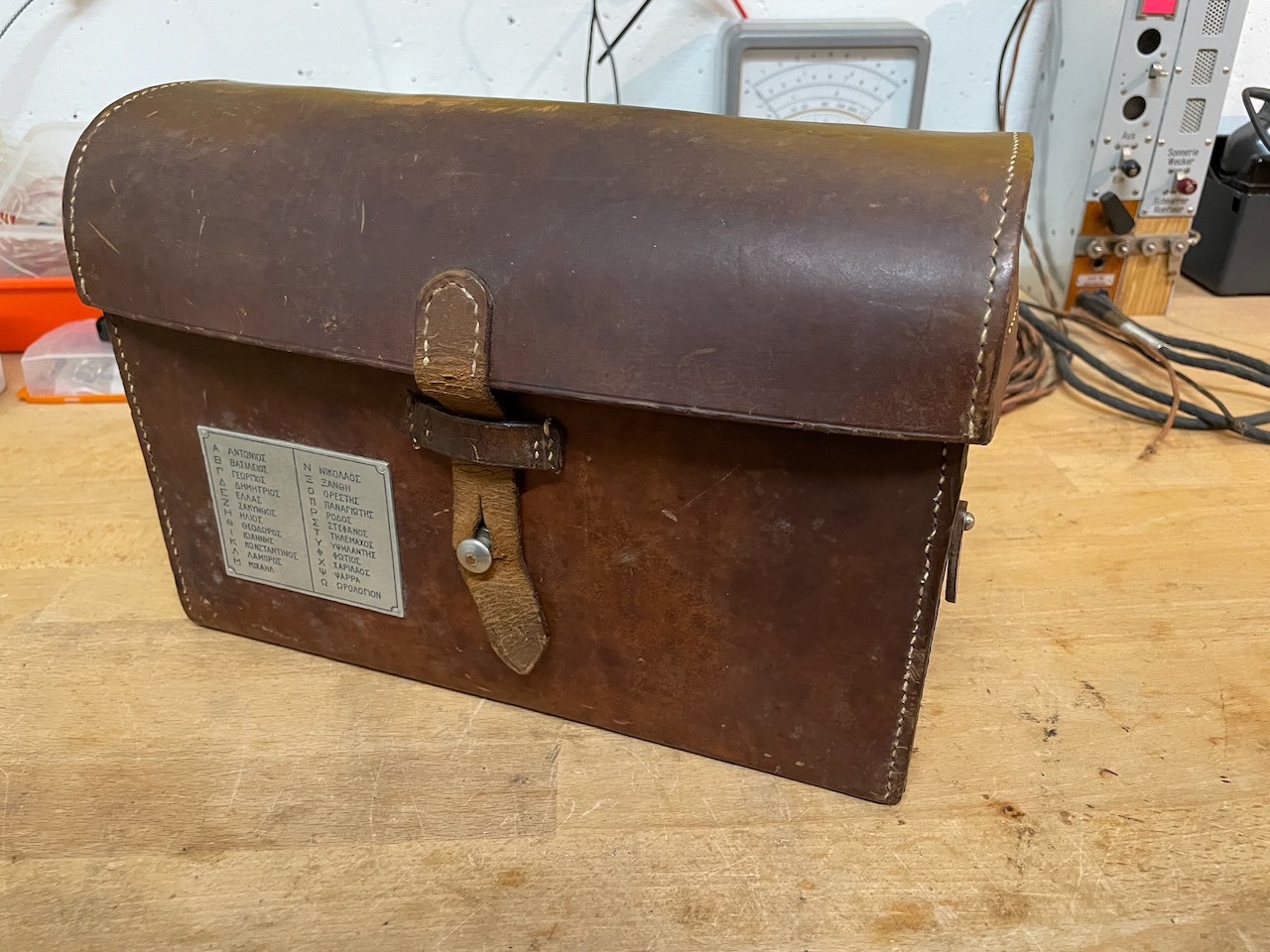
Greek spelling table attached to the leather case.
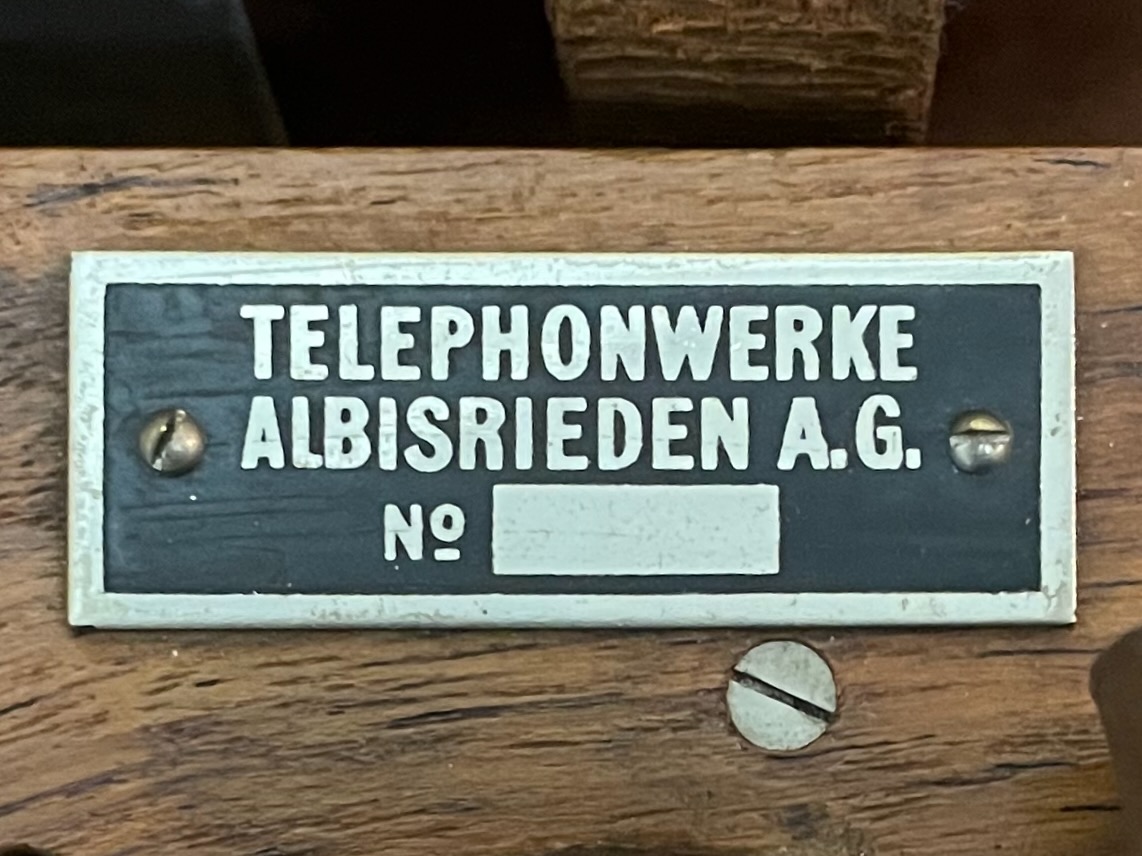
Manufacturer label.
Made by Telephonwerke Albisrieden (Swiss Siemens subsidiary).
No number (serial or inventory?) stamped in. As I acquired the device in Switzerland and looks nearly mint (apart from the missing carrying strap) it was maybe never shipped and held as spare or example at Telephonwerke Albisrieden.
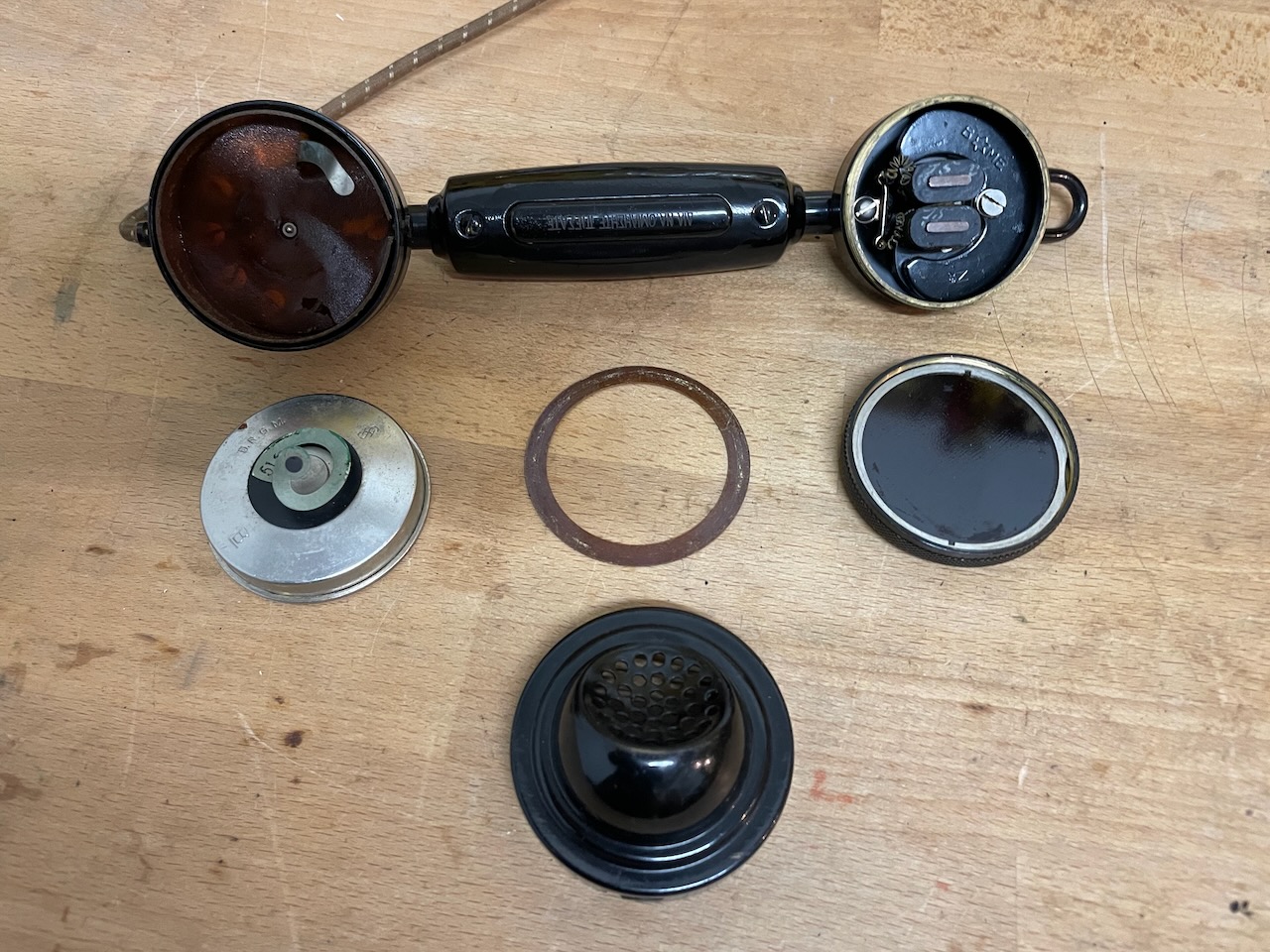
Disassembled handset.
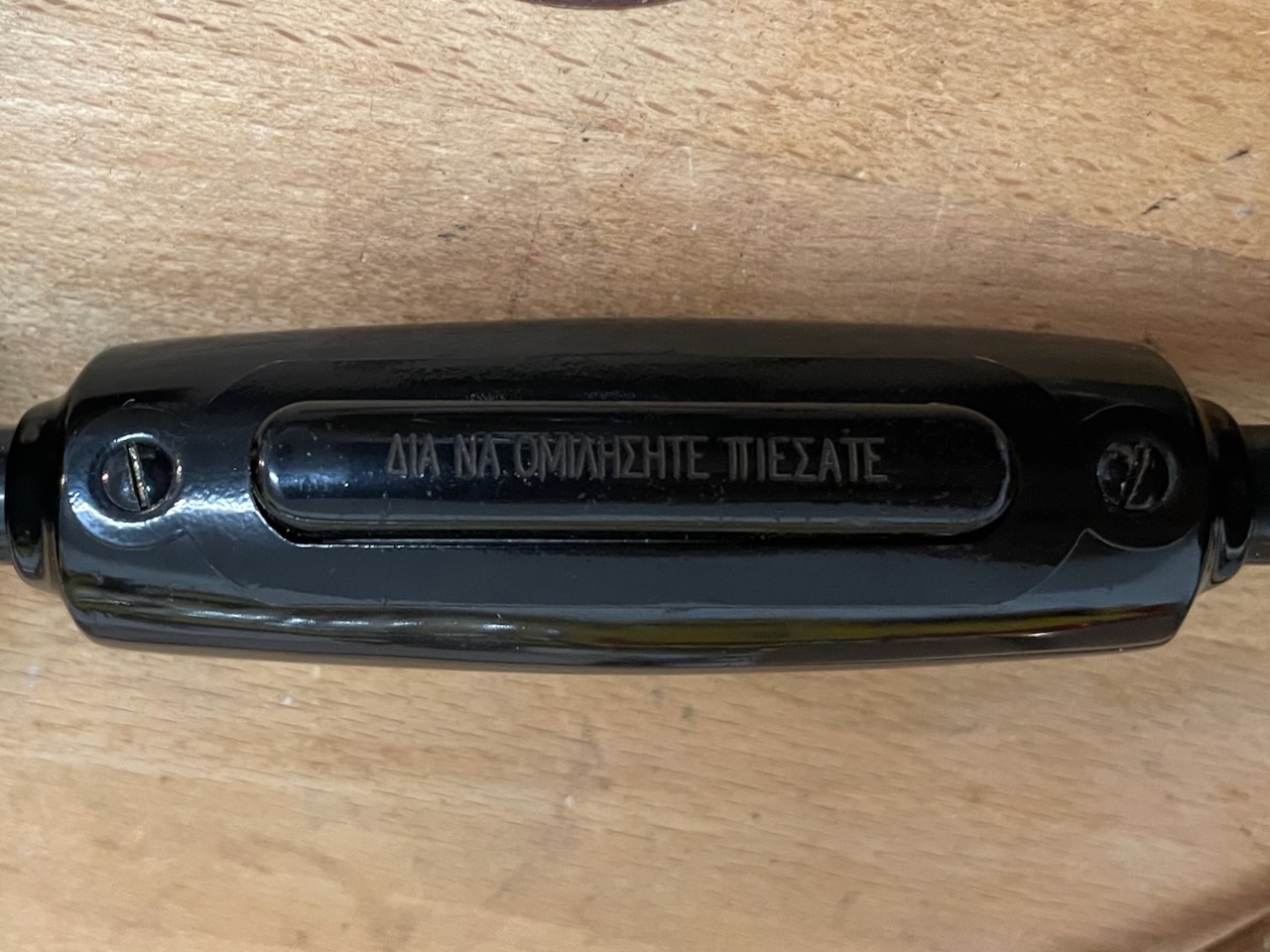
Push to talk lever inscription translates to "Press to speak".
Receiver, 2x 75 Ohm.
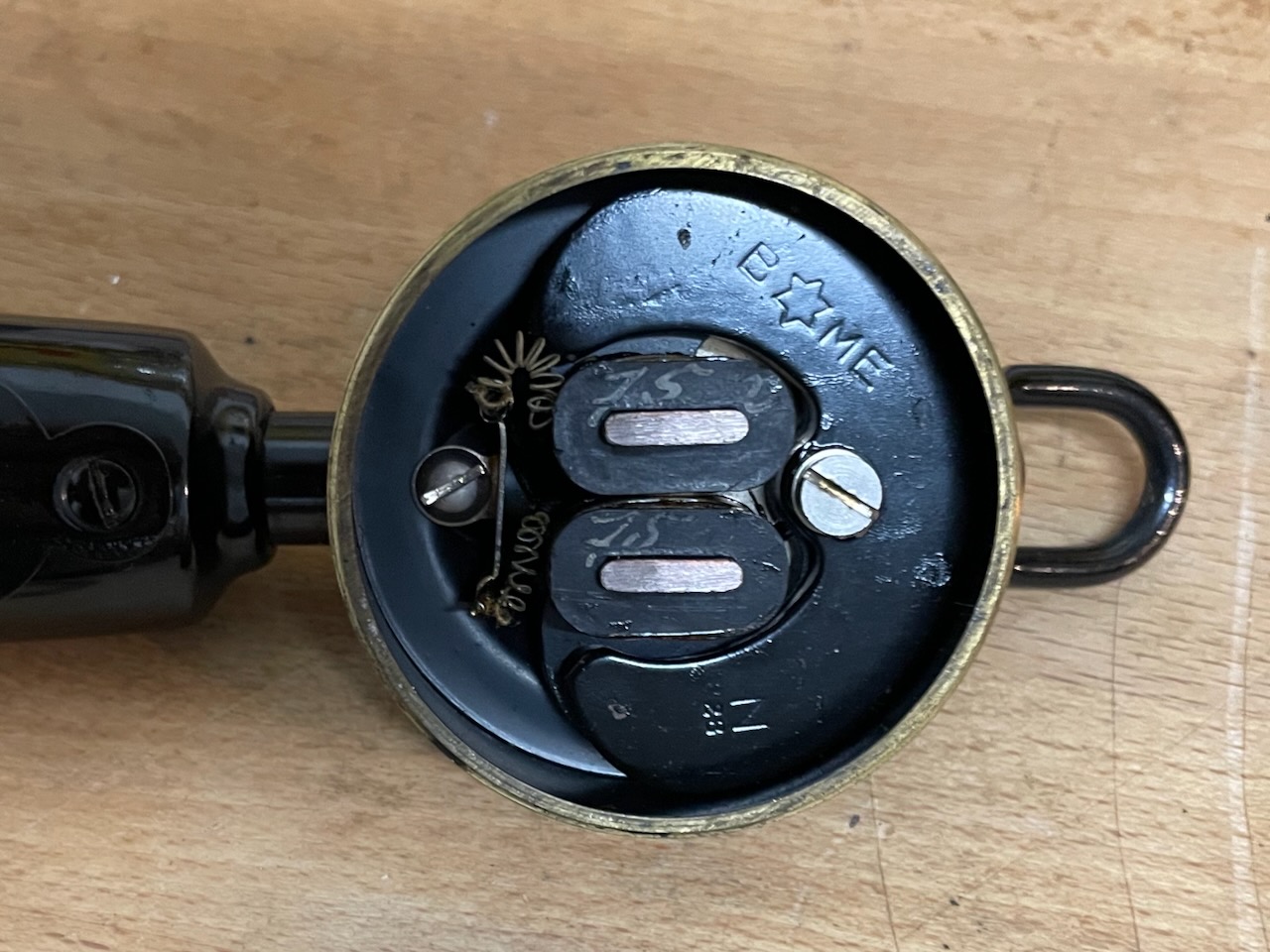
Transmitter element made by Siemens & Halske.
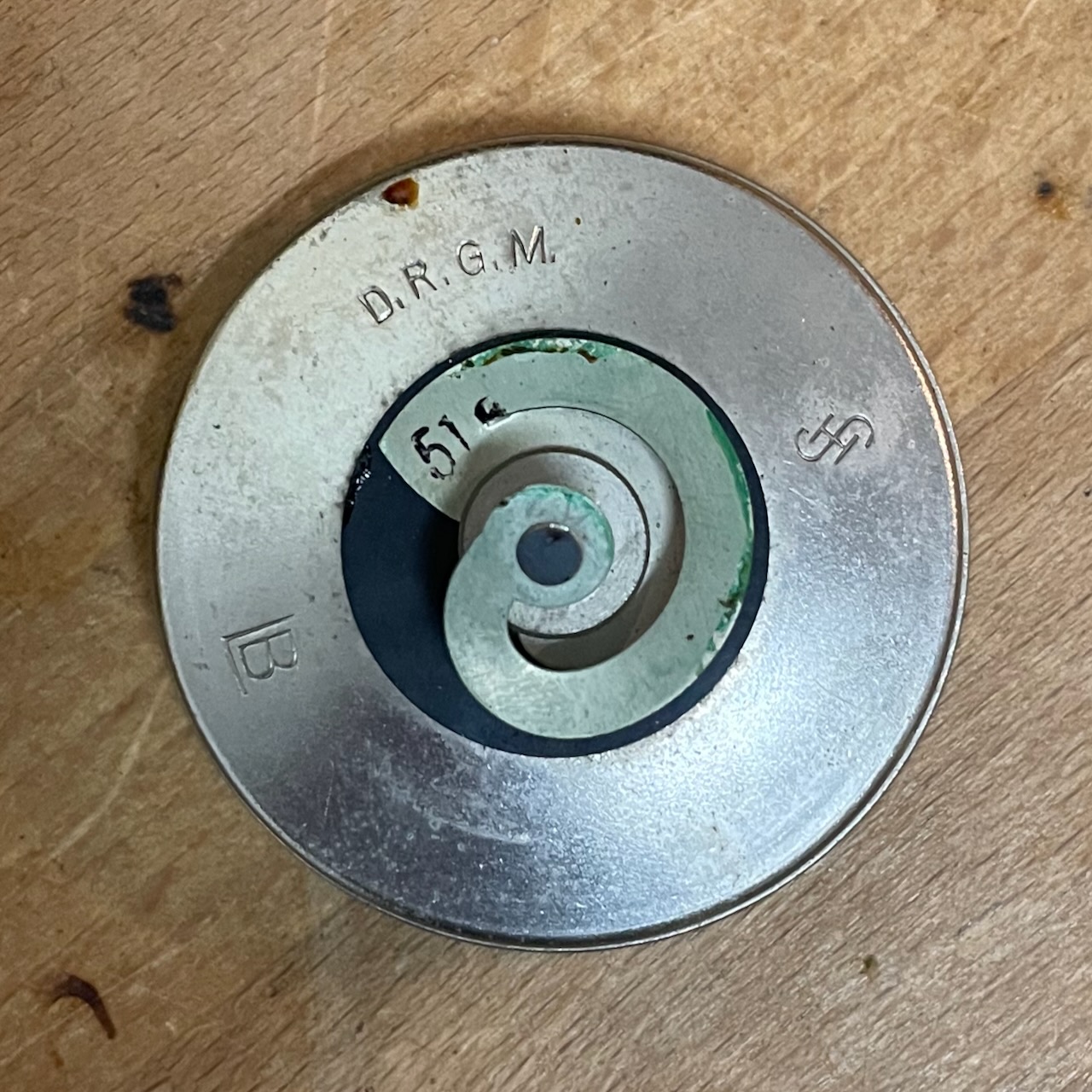
Spare transmitter element.
"9 28", made in 1928?
"T2N" might be a Siemens date code.
But then the mfg. year would be 1932.

Back door of chassis opened. folds down (2 captive screwes to open).
Left compartment: Ringer & Magneto.
Right compartment: Grafite surge protector, capacitor (with mfg date 1930), coil, handset terminals.
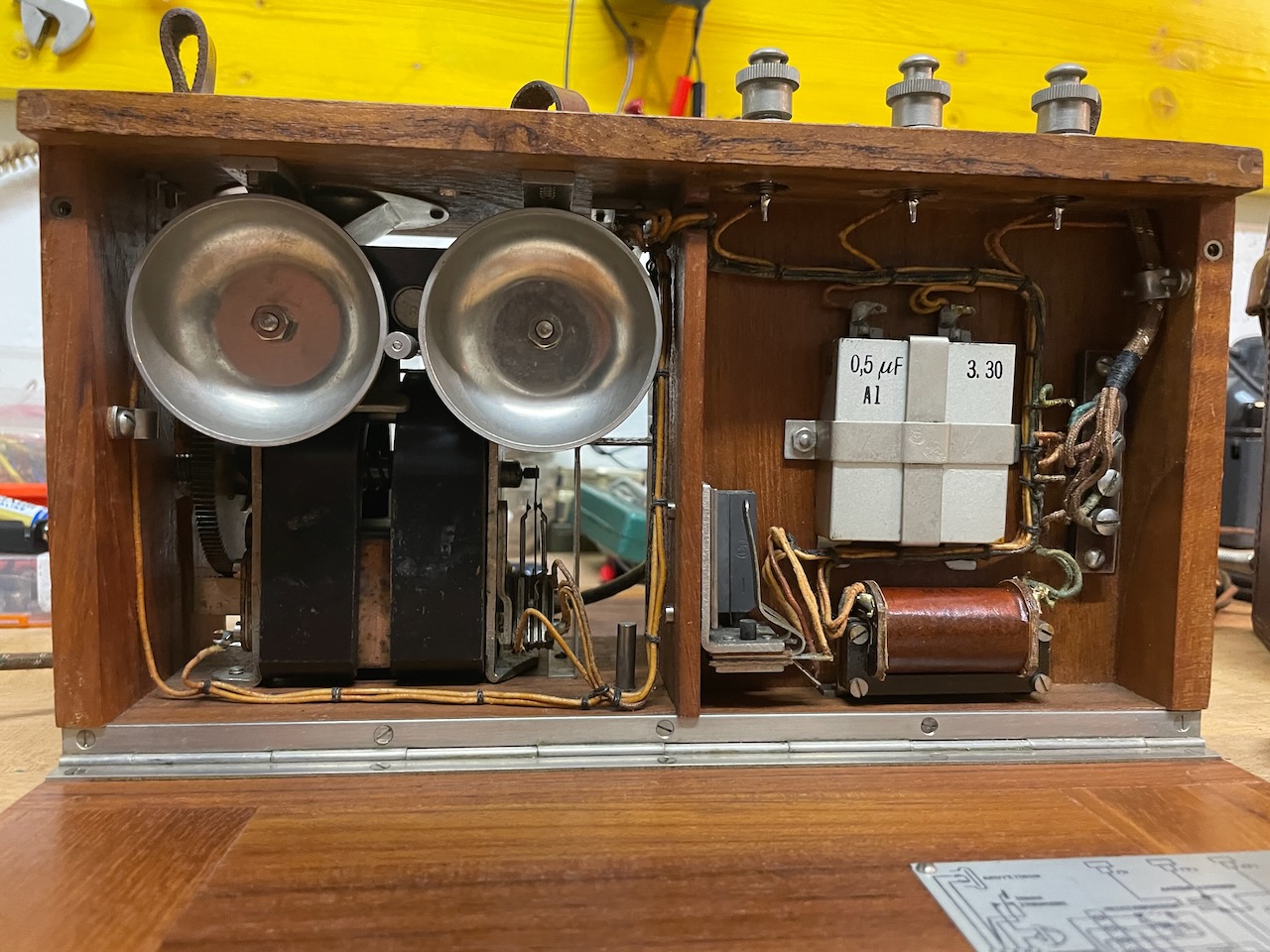
Removed graphite surge protector with two carbon elements and isolation screen.
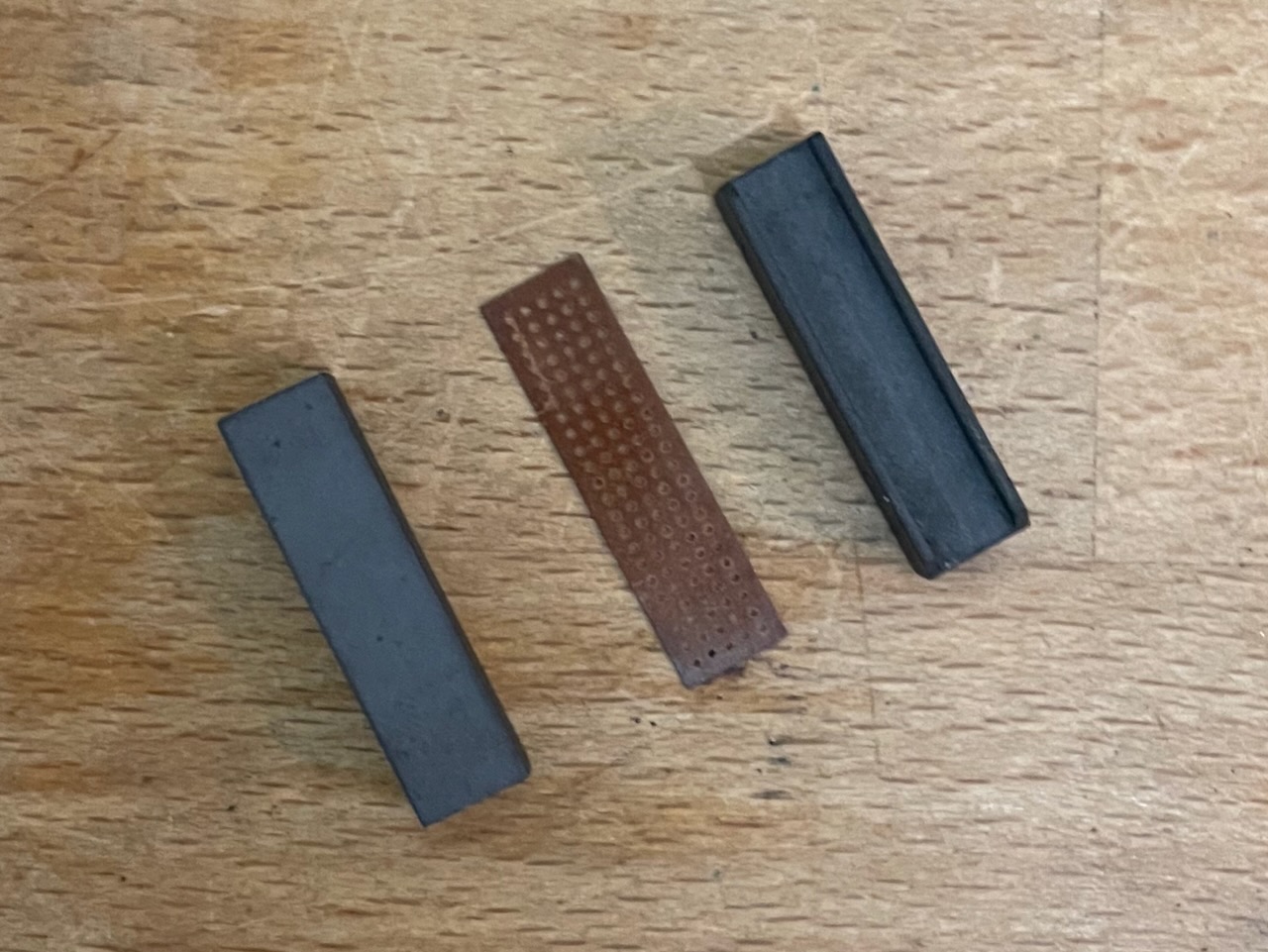
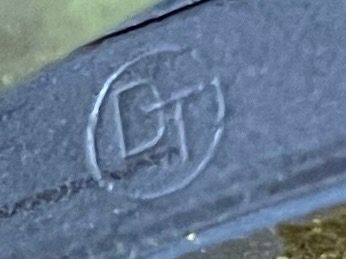
The carbon element is stamped "DT", assuming this is the manufacturer (unidentified as of now).
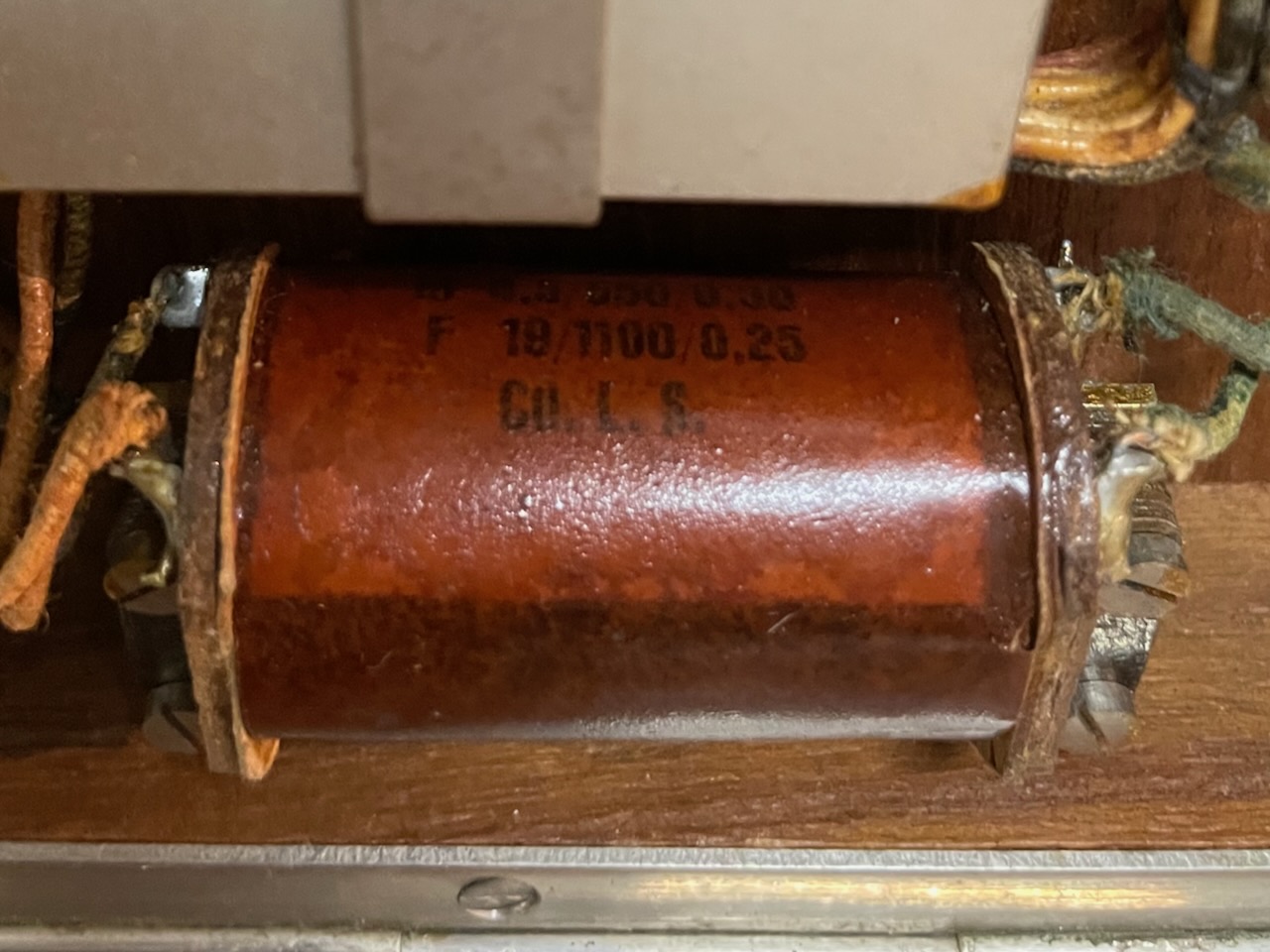
Induction coil.
Magneto and ringer through the chassis front door.
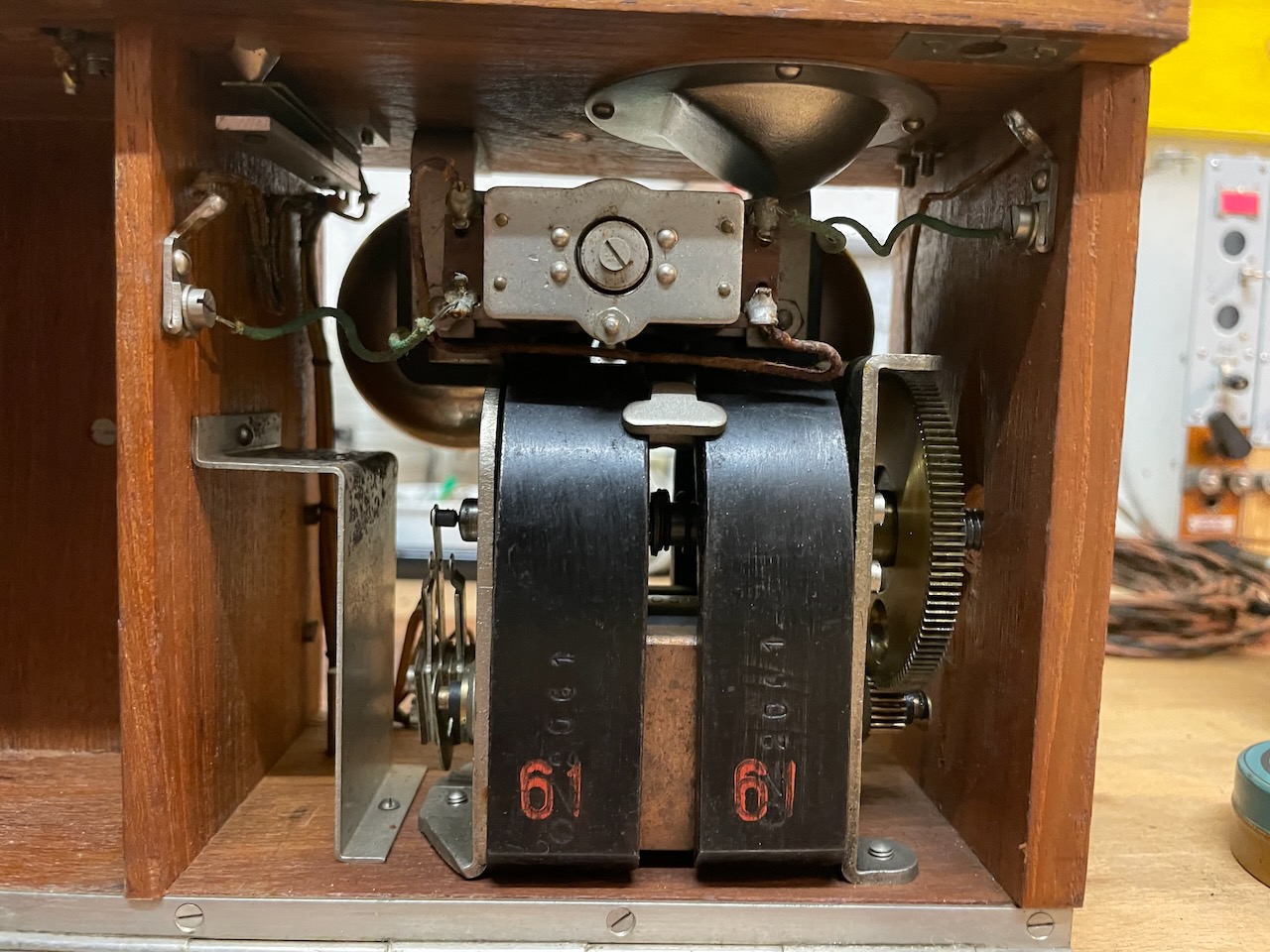
Front door folds down, is held closed by a ball detent mechanism.
In the left compartment space for 2 1,5V elements of the size of a german "Element d (T30)" (here used for demonstration).
The battery terminals are on top outside the compartment.
In the right compartment spare transmitter element, magneto and ringer.
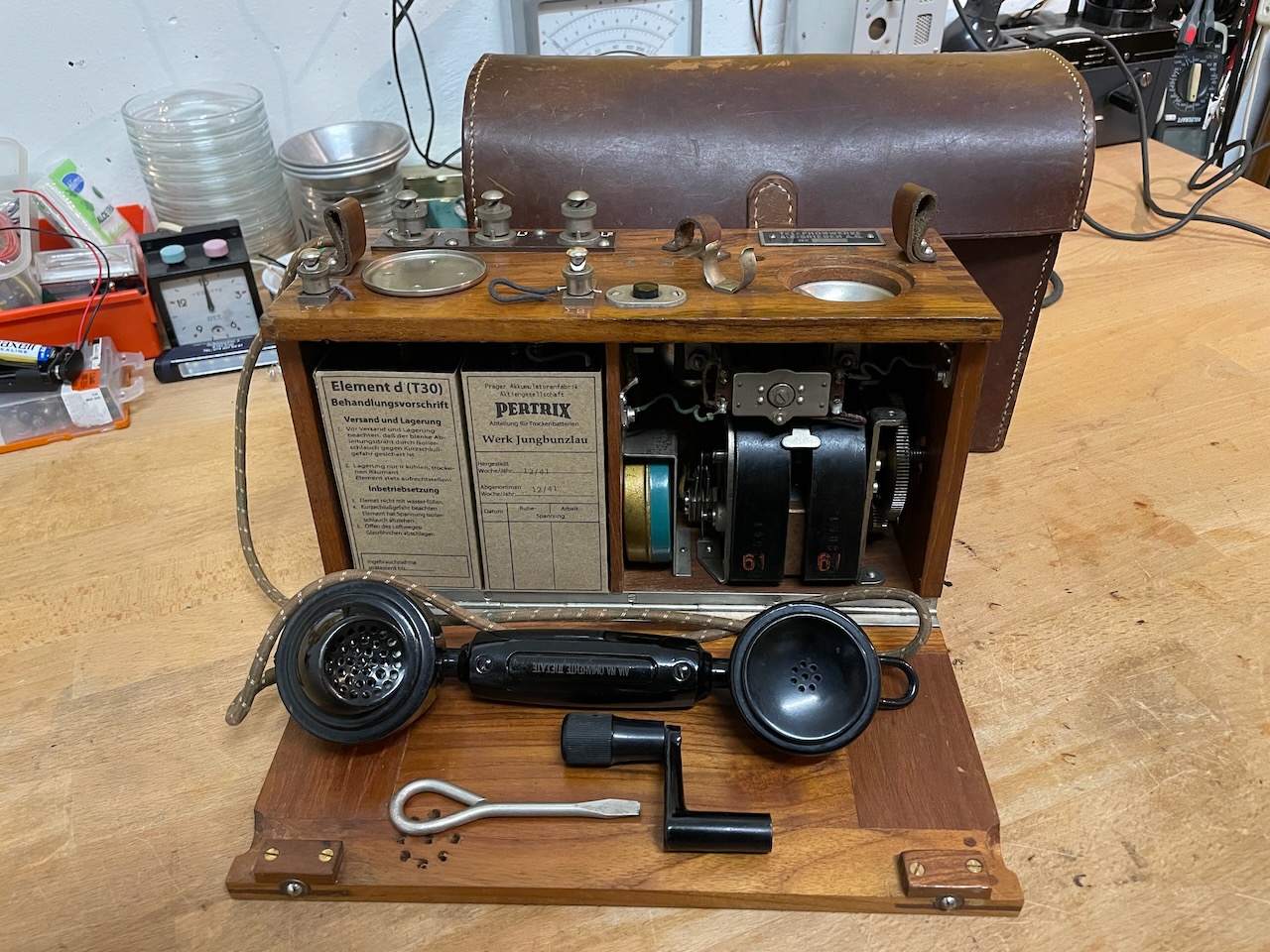
On top of the chassis the earth and line terminals, the battery terminals, the line test button, and holdings for the handset and the magneto crank.
The chassis is not fixed to the leather case, just put in from top, on the chassis top two leather handles help to get it out.
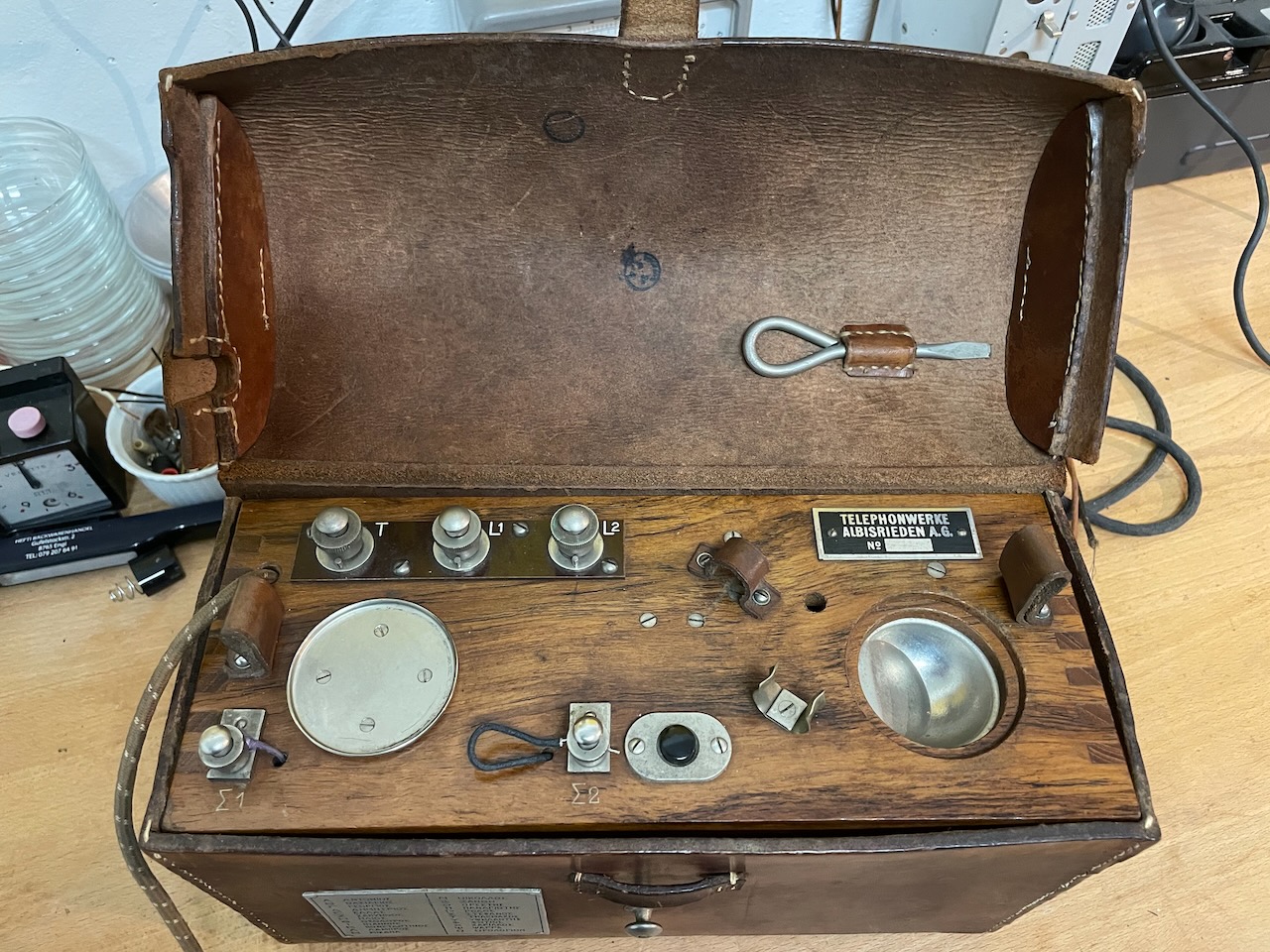
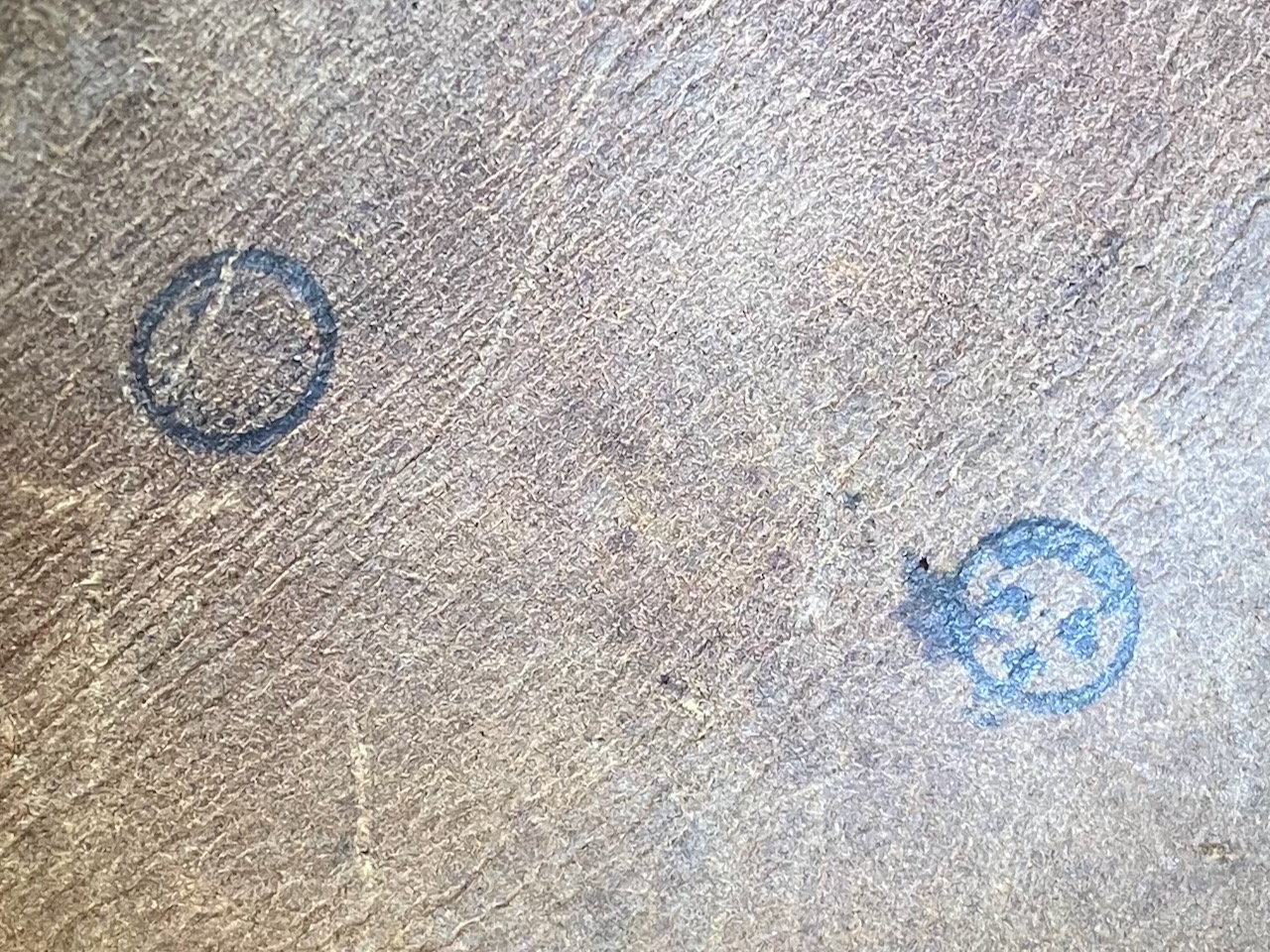
The marks inside the leather case top lid are not legible.
All stored, handset, magneto crank, screw driver.
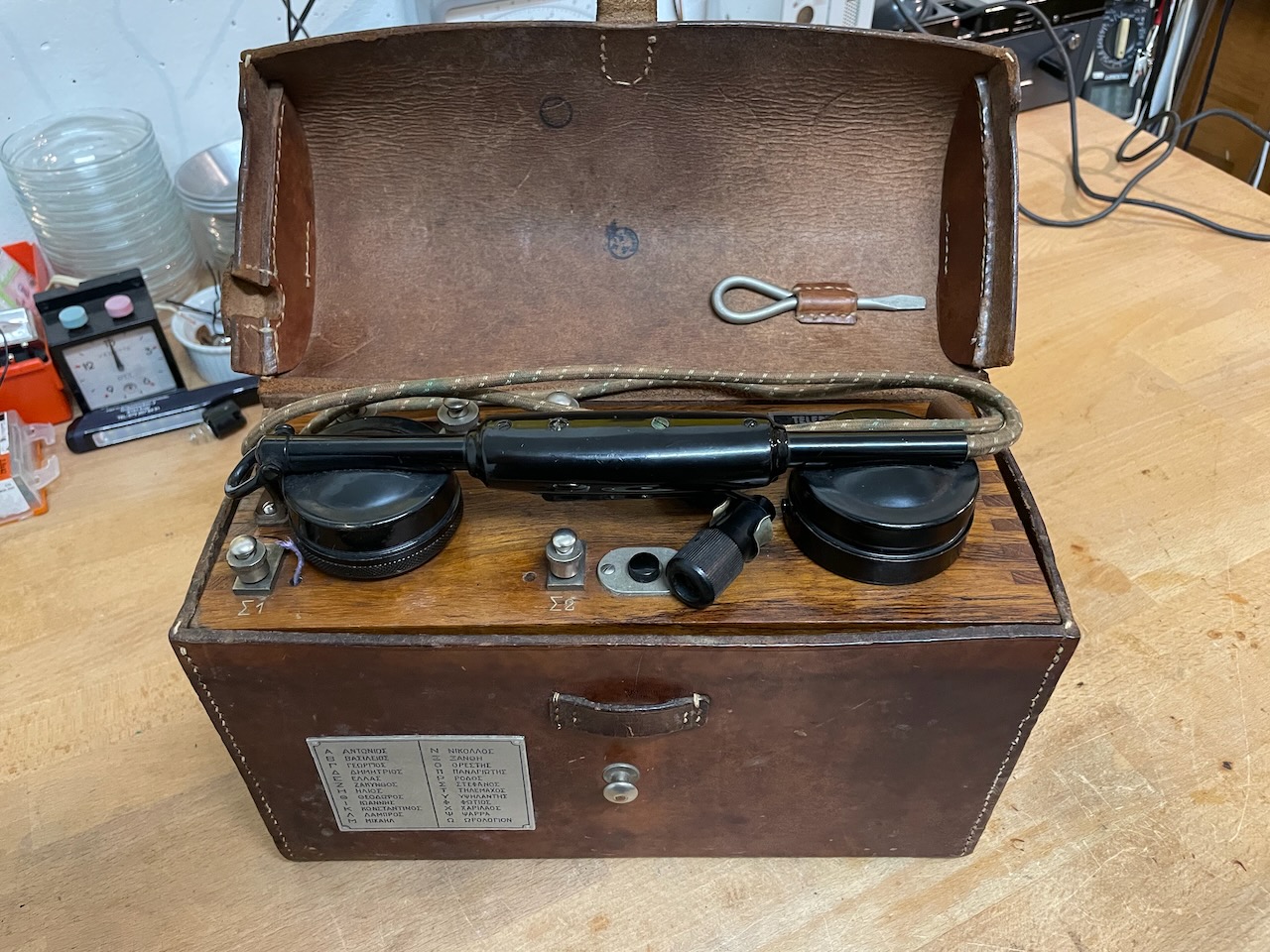
Magneto crank stored.
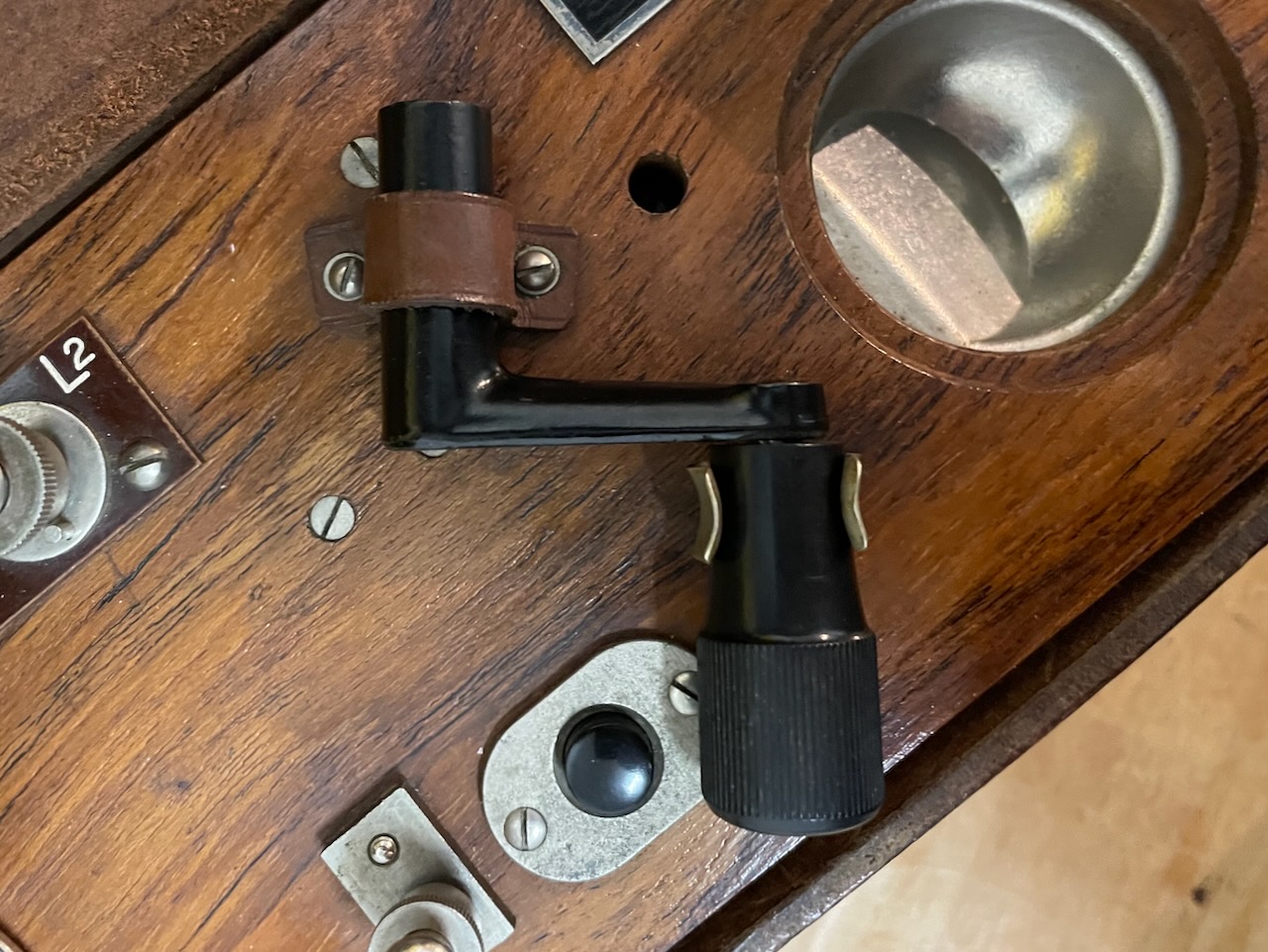
Ready for use.
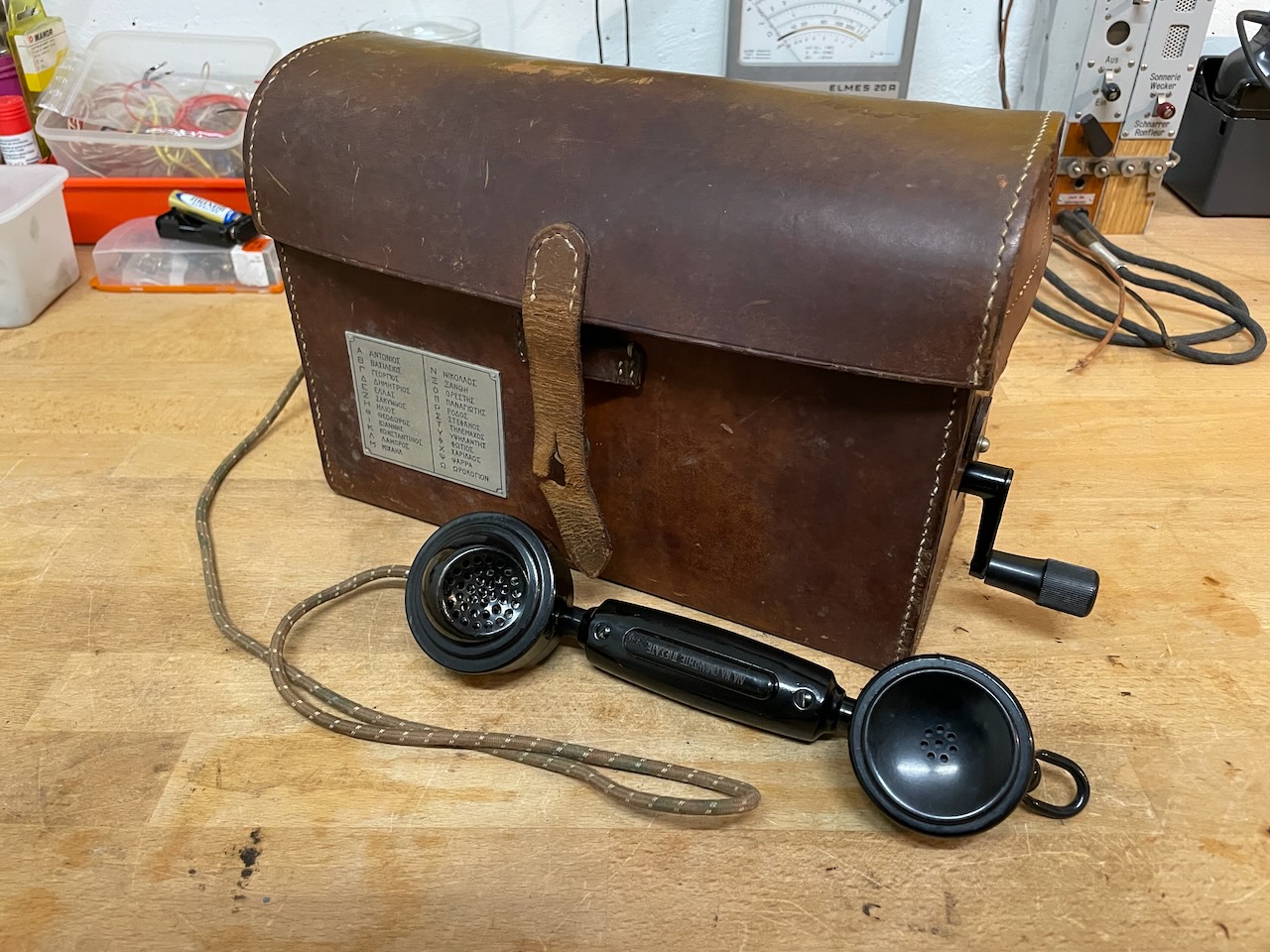
Crank detail.
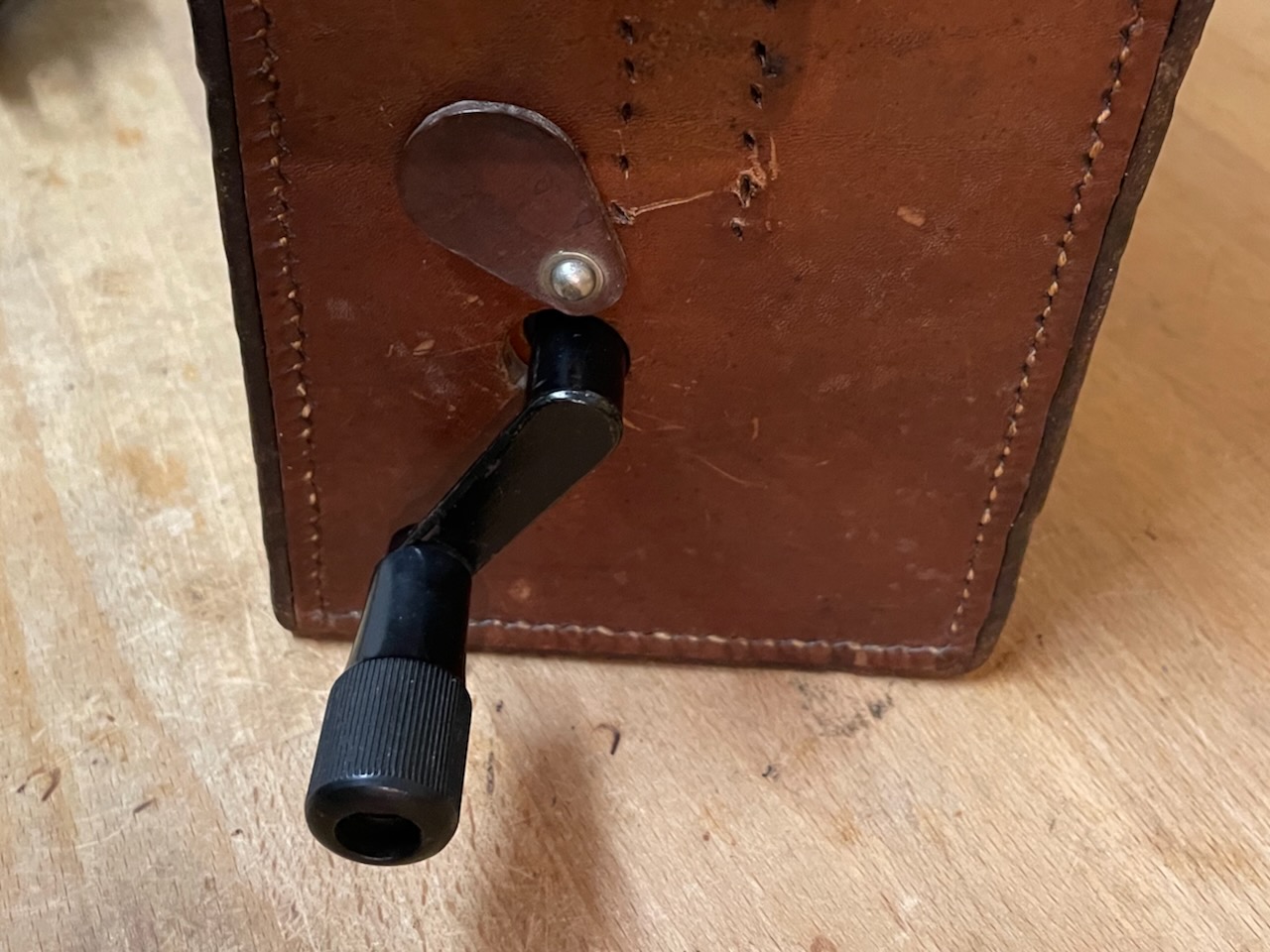
Ready for transport.
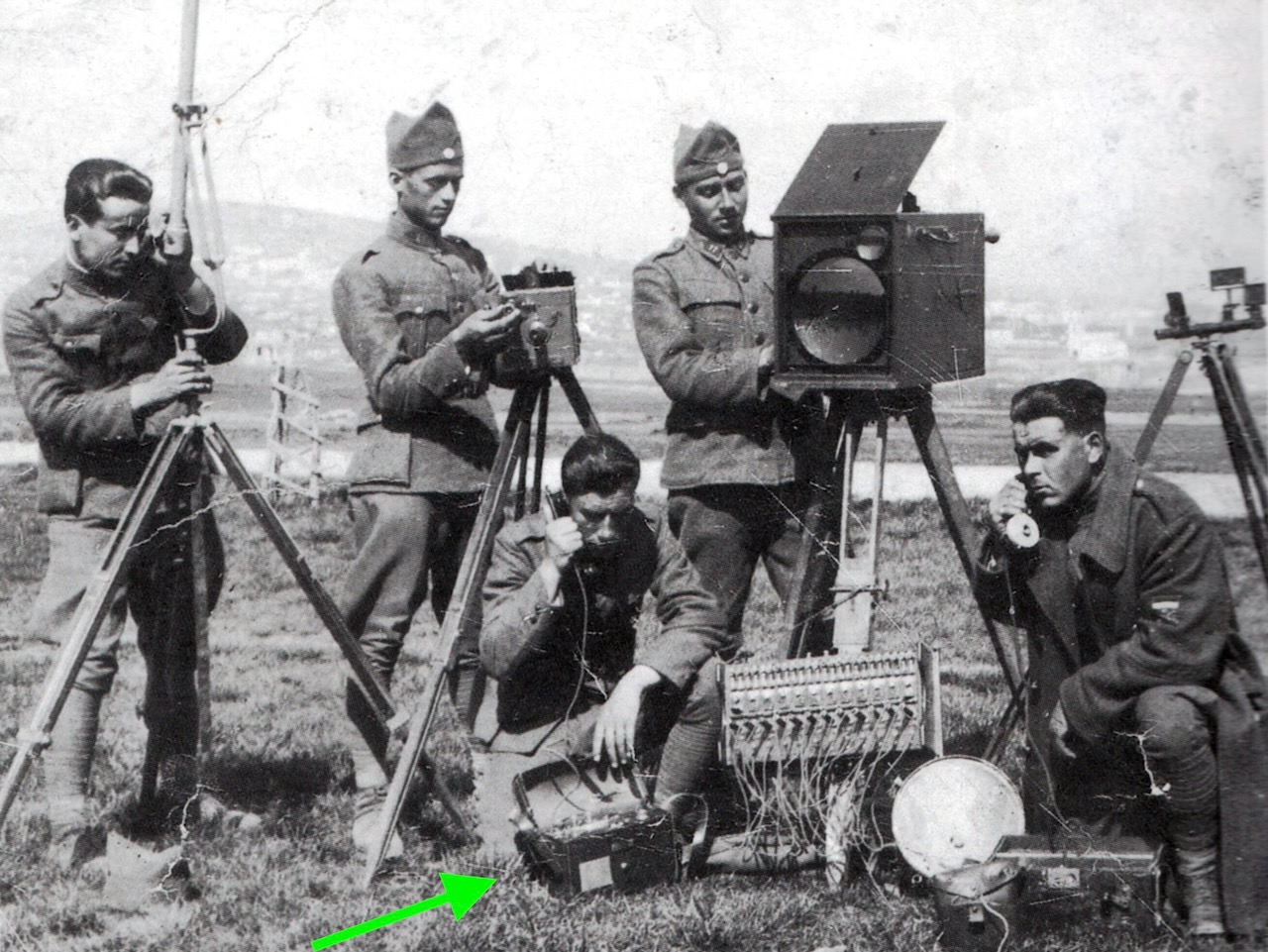
The same model appears in a contemporary photograph [2] showing Greek Army signals personnel, probably during a communications exercise or equipment demonstration in the early 1930s.
The soldiers wear uniforms consistent with those used during the premiership of Eleftherios Venizelos (1928–1932) [3].
The equipment shown, from left to right:
top row: a periscope, possibly a camera, and possibly a signalling lamp or heliograph;
bottom row: the Albisrieden field telephone, a telephone switchboard, and another field telephone, possibly a German Feldfernsprecher.
Creative Commons Attribution-ShareAlike 4.0 International License